
"We Can Stop Strokes"
Dr. Kory speaks in Paris. In French. On how DMSO, a staple of my medicine cabinet, can revolutionize and heal.

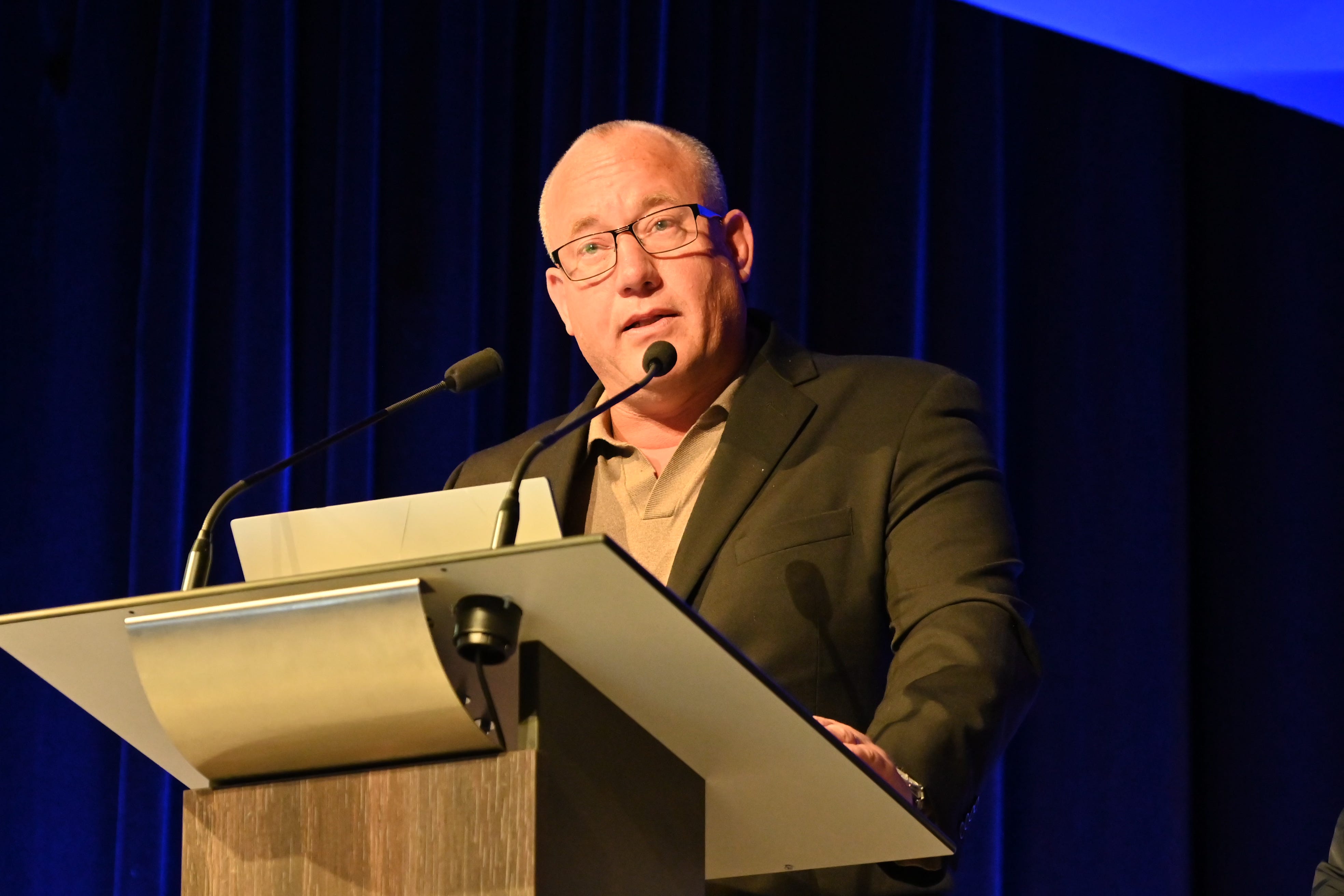
Dr. Pierre Kory, who pioneered the anti-parasitic drug ivermectin as an effective treatment for Covid-19, took his mission to revive forgotten medicines to an assembly of 300 in the heart of Paris on September 27.
As guest of honor at Congress 2025 of the International Association for Scientific, Independent and Benevolent Medicine, Dr. Kory made the case not for ivermectin but for two other powerhouses of medical potential: DMSO, or dimethyl sulfoxide, and chlorine dioxide.
He gave his lecture to a packed house, delivering it in French (the language that he learned, he told me, from his French mother and Hungarian French-speaking father, and from summers he spent at camp in the Hautes-Alpes and visiting with family in Marseille and Normandy).
In France, DMSO is “rarely used,” an association official told me, similar to the United States, where awareness is growing. Chlorine dioxide is better known in the French community of natural medicine and is “used by tens of thousands of people,” said the official, who did not want to be quoted. Both are available online but prohibited from prescription.
This article is about Dr. Kory’s lecture on DMSO’s untapped curative ability. His comments resonated with me, having interviewed patients and doctors who have benefitted from it. While chlorine dioxide—“the ultimate antimicrobial,” Dr. Kory called it—is every bit as game-changing, that’s for another time.
In opening his talk, Dr. Kory gave credit to A Midwestern Doctor, an anonymous Substack writer with 269,000 subscribers, for plucking DMSO from the archives of medical history. AMD’s dozen or so articles, Kory told his French audience, are “the most comprehensive review of all of the studies on DMSO.”
The goal of both doctors is to broaden DMSO from its few narrow uses: As an FDA-approved treatment for a serious bladder condition called interstitial cystitis; as an off-label supplement that increases the effectiveness of cancer drugs; and as a preservative for transplant organs.
In his lecture, Dr. Kory, with whom I have written op-ed articles, covered some of DMSO’s many mechanisms:
[DMSO] has the broadest range of mechanisms that you can imagine . . . It crosses biological membranes . . . reduces inflammation, protects cells . . . reduces formation of blood clots without causing bleeding. So it’s magical in that way.
And it even relaxes muscle, causes vasodilation . . . can work on collagen diseases. And it’s good for scars and wounds and other contractures. So it truly is an umbrella remedy. It can be used in just about anything because of its broad mechanistic base.
DMSO’s many and varied uses were likely rooted in its downfall in the late 1970s, when the FDA pulled its support and discouraged ongoing research. For the agency, there may have been too much to regulate. For the pharmaceutical industry, there was likely too much to lose.
Today, nearly 40,000 medical articles—mostly small studies that don’t meet today’s standard of expensive randomized trials—are collecting dust in PubMed’s digital archives.
“I think if I would have said it was good for a sprained ankle, but only if the ankle sprain were on the left side,” DMSO’s pioneer, Dr. Stanley Jacob, said on CBS’s legendary investigative news show 60 Minutes in 1980, “DMSO maybe might be approved today.”
Highest Use: Stroke
I’ve written two lengthy articles on DMSO. My first featured a woman whose horribly broken spine healed enough to allow assisted walking and independence; it compared DMSO’s myriad possibilities to penicillin.
The second article reported on Erica Eyers, whose lung transplant was postponed after a few months of applying a DMSO gel (obtained cheaply from Amazon) to her chest for another reason entirely—a scleroderma rash. Her lungs benefitted.
Almost a year later, Erica Eyers told me last week that she is breathing better and has no sign of the interstitial lung disease she had been diagnosed with. “My scans actually improved!!!” she texted.
Patients like Eyers and articles from DMSO’s gloried heyday suggest this eminently safe byproduct of wood pulp manufacturing needs resurrection—if only for one single purpose.
“I’ve told my wife,” Dr. Kory told his French audience, “that if she ever sees me having stroke symptoms, the first thing I want her to do is get DMSO and start applying it to both of my carotids,” referring to arteries in the neck that provide oxygen to the brain.
Indeed, dimethyl sulfoxide’s most remarkable and far-reaching power may be that it can stop and reverse the damage of strokes. There ought to be medical conferences on these documented findings alone.
From Dr. Kory’s lecture:
But I find the most fascinating thing, because remember, I was an ICU doctor, and treating patients with huge strokes and brain bleeds and aneurysmal hemorrhages, it was some of the most difficult and depressing conditions to treat because the patients were so sick.
Many of them would go on to lives of significant impairment. And when you look at some of the studies where if you put on DMSO, and even topically . . . it will get into the brain and it will relieve a blood clot . . .
It will stop bleeding. It can resolve the blood that’s collected there . . .
It’s just insane to me that all around the world, we’re practicing neurocritical care without a standard initial approach of doing IV DMSO or topical DMSO.
A Midwestern Doctor wrote this on stroke: “Had the FDA not sabotaged DMSO’s adoption, in addition to countless lives being saved, millions could have been protected from a lifetime of disability or paralysis.”
The United States counts about 795,000 strokes per year, with 162,000 deaths in 2023.
Dr. Jacob, who died in 2015, gave his many patients a “stroke kit” with a DMSO vial and a syringe. In the event of stroke, the vial’s contents were to be quickly injected into the buttocks. Anecdotal reports suggest that topical use, sometimes combined with oral DMSO mixed with water, also works.
How I Use DMSO
I have made DMSO a staple in my family’s medicine chest and a necessary item in the glove compartments of our cars. I have given it to my two adult children and to friends. Yearslong conditions may not have been resolved, but they have been allayed in ways that pharmaceutical products, pain relievers, and advice from mainstream doctors could not and did not.
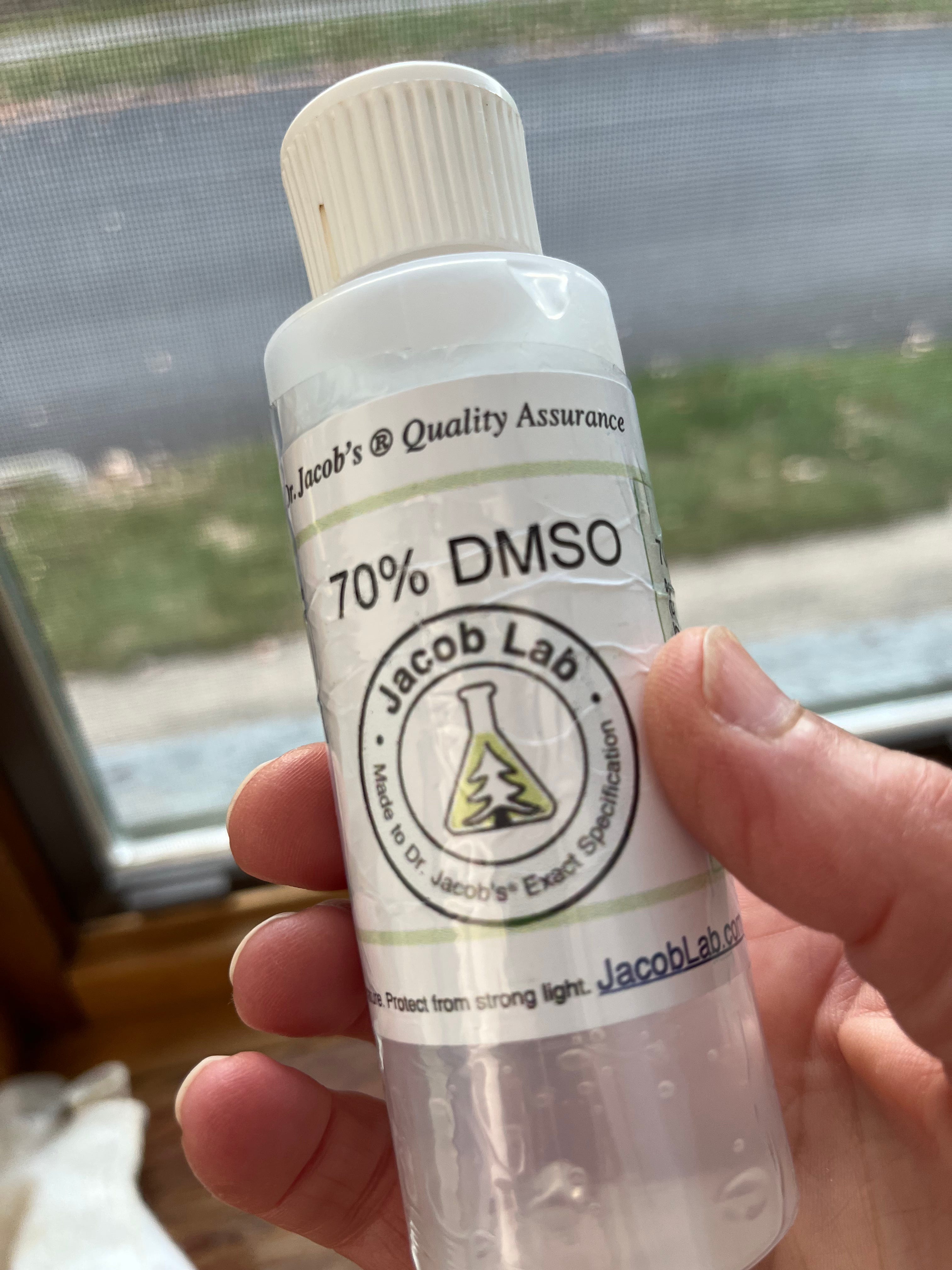
Here are a few of my experiences and reports on the use of DMSO, usually in a 70 percent solution that comes mixed with deionized water.
Two rounds of antibiotics failed to eliminate a tooth abscess in my back molar. Two to three weeks of DMSO, applied to a small piece of cotton and placed between the cheek and gum, did the job. Tooth removal has been put off. I apply it to my spine and lumbar region for the pain of having worked out too hard (and getting older) and, as needed, to toe pain that I suspect is developing neuropathy. I get relief almost immediately.
Other family members, not easily convinced to try off-the-grid treatments, swear by DMSO: To heal and prevent everyday bruising abetted by a blood thinner; to relieve shoulder pain from polymyalgia rheumatica and a torn ligament; to hasten healing and curtail damage of small cuts and burns far better than drug store topicals; to manage chronic swelling and pain from a fused big toe that had persisted for years after surgery.
A friend‘s husband had woken up for months with undiagnosed knee pain; he no longer has the problem. “It’s amazing when these things go away,” she told me.
Other friends thanked me for recommending it, one for fibromyalgia back pain.
As Dr. Kory said in Paris: “It’s actually really good at treating pain. Not in everybody, but in a high proportion of patients with chronic pain, if they put DMSO in the area of pain, they will find relief.”
He added later, “The best part is pain. I mean, it’s $25. You can buy it on Amazon, at least in the U.S., and you just pour it on your hand and you can apply it to sore knees, inflamed knees.”
That’s the easy part. Of great frustration, however, is the netherworld one enters in using something that doesn’t come with instructions and sometimes has warnings not to apply topically. As I have reported previously, I tried DMSO for tinnitus but the one published study on its use involved an impractical protocol of a DMSO ear spray mixed with anti-inflammatory and vasodilatory drugs and daily injections.
We need medical guidance and willing doctors. Lacking that, many other friends and relatives have steered clear of DMSO.
Here are a few more excerpts from Dr. Kory:
On Safety
It’s really, really safe. About the only thing that you run into it is skin irritation. You can get rashes. Some people just can’t tolerate it topically. But I will tell you, if they can’t tolerate it topically, they will be able to take it orally in almost all circumstances. It’s never been shown to be a carcinogenic or produce birth defects. And so it really is one of the safest medicines known to man. There is a huge literature evidence base. Again, not what we would call high-quality, rigorous, randomized, controlled trials, but certainly many, many. There are many, many, many studies on it all around the world.
Unlimited uses
[DMSO has been used to treat] collagen and autoimmune disorders, lupus, MS, especially misfolded protein. So it’s been used in amyloidosis, scleroderma, contractures, fibrotic diseases like Peyronie’s disease. It dissolves excess contractile tissue, softens scar tissue, improves mobility, and it can speed healing. And also, if it doesn’t do that, at least it halts their progression, which can be truly a dramatic achievement in someone with a deteriorating illness . . .
There are studies where it can potentiate the effects of antibiotics. It can break down microbial resistance, and apparently is effective as even a solo agent in bacterial viral fungal infections. And basically, it enhances circulation, it protects cells from microbial toxins, and it’s particularly helpful for head, dental, skin, and severe infections.
Finally, even cancer
Now, cancer, you just won’t believe this drug and how versatile it is, but it has numerous different mechanisms that make it effective for cancer. It can differentiate the cancer, meaning instead of in this undifferentiated, rapidly dividing state, it can push it back into a more ordered, differentiated form of the cell. It can do that in a wide range of cancer. It also suppresses oncogenes, upregulates tumor suppressors, promotes apoptosis, and helps normalize the structure of tumors, particularly with immune recognition. So like I said before, it can upregulate tumor suppressors, so exposes hidden tumor engines, so the immune system is more able to remove it. And it’s being used in experimental cancer vaccines and immunotherapy protocols because it primes immune responses and thus basically makes it more susceptible to immune cell attack and overcomes immune-evasion. Then again, for cancer, especially DMSO, when taken, when applied before or after radiation, it really mitigates radiation injury. Now in the U.S., I don’t know of any radiation oncologist who uses it.
As I read Dr. Kory’s lecture notes, there came a point of overload. Is it really possible that one simple, safe substance can do all these things? Dr. Kory and other doctors are seeing impressive, sometimes startling, results among their patients. Their experiences must count as much as prohibitively expensive randomized trials.
The challenge now is how to get DMSO into mainstream consideration and use. We need to find out if its possibilities are real.
 | A guest post by
|
Thank you Mary Beth. I’ve shared widely. Especially with my doctor friends.
I used 99% DMSO bought from Tractor Supply, mixed it 70/30 with organic cold pressed castor oil, topically to heal my husband’s pilondial cyst. It occasionally returns, we start treatment again & it goes immediately away. Saved him from having to have surgery!