
His Mission: Saving Lives and Souls With Chlorine Dioxide
In Africa, missionary Dan Healy has used chlorine dioxide for almost two decades to heal illness while also preaching the gospel. “It’s hard to say what I love more,” he said.

Part 4 of a series on chlorine dioxide by Mary Beth Pfeiffer. Here are Parts 1, 2, and 3.
When he is in the United States, Dan Healy is a substitute gym teacher in his home city of Bakersfield, California. But when he sets foot into a tattered city or village in West Africa—in sojourns that last as long as his money does—he transforms.
Since 2007, in countries like Guinea-Bissau, Sierra Leone, Gambia, and Senegal, this Christian missionary has likely saved more lives in a single week than the finest American doctor may in a year.
If Healy is a twenty-first century Clark Kent-turned-Superman, his superpower is chlorine dioxide.
He may not scale buildings in a single leap. But armed with a simple pathogen-killing molecule—two atoms oxygen, one atom chlorine—he quells typhoid. He brings toddlers back from the ravages of malaria, which annually kills 425,000 African children under five years old. He takes out asthma, tapeworms, fungal infections, and whole-body rashes. He saves teeth to boot. All this with an oxidizing substance with almost no side effects that is used with government blessing to purify the water of 12 million Americans.
Granted I cannot verify all of these reports by Healy, who first told his story as “Dave the Missionary” in a 2021 documentary on chlorine dioxide called The Universal Antidote. But in addition to detailed interviews with Healy, who decided to forego anonymity for the first time, I was able to speak with key witnesses to his work.
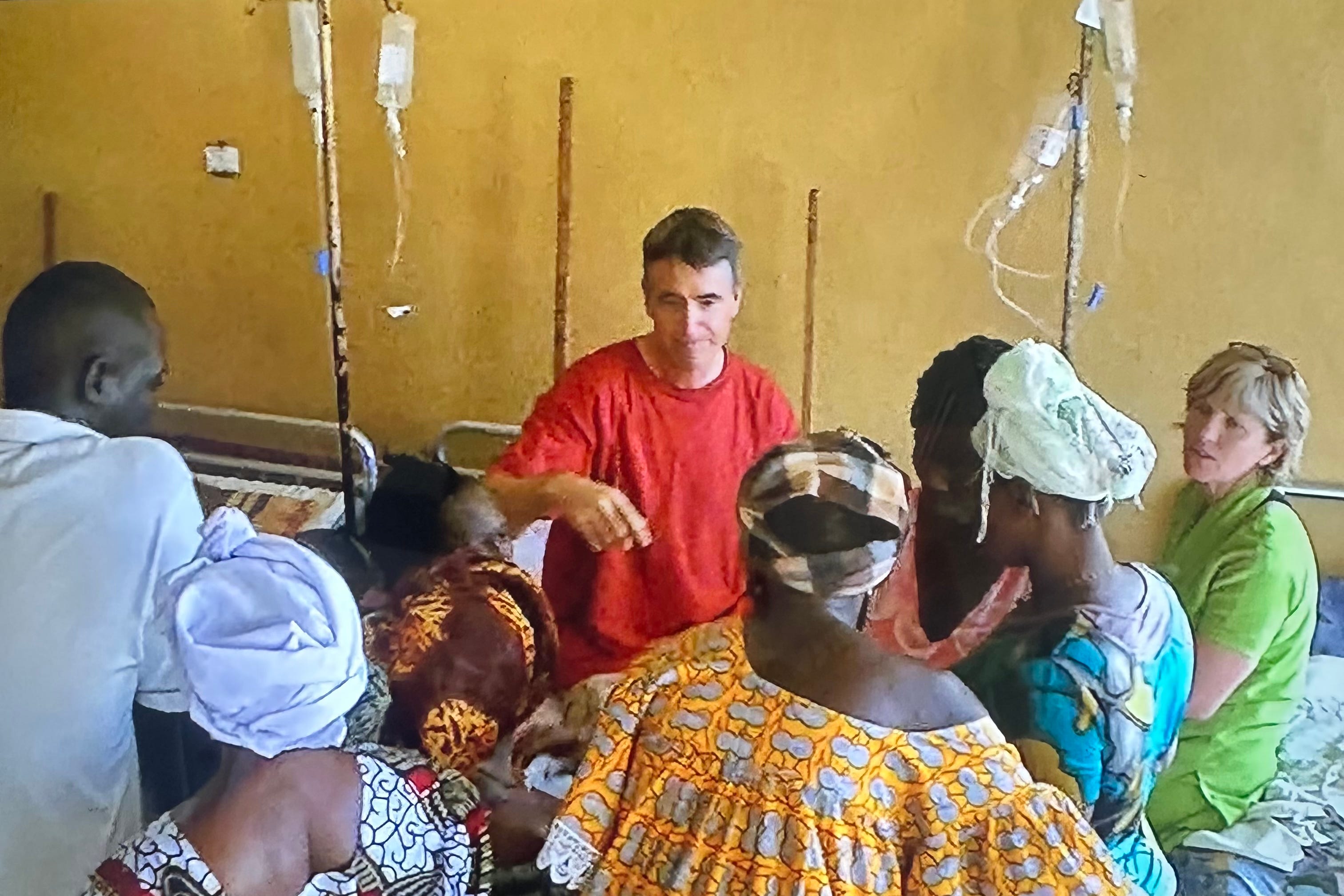
A missionary couple who visited a pediatric ward with Healy in 2011 in Guinea-Bissau, a small country on the Atlantic Ocean south of Senegal, said they were “amazed” to see malaria quickly resolve in ill children after one chlorine dioxide treatment. Malaria infection of the brain is commonly fatal to 15 to 25 percent of children, even with hospitalization and advanced care.
An assistant who worked for Healy for six years told of successfully treating high-ranking officials in Guinea-Bissau’s ruling party—and many others—with CD for malaria, typhoid, and even diabetes. The word got out, he said, and the report that started spreading was: “That clinic is good. They have good medicine.”
A senior consultant physician in Sierra Leone, Dr. Kojo Carew, said he attended a meeting in 2025 with Healy and the country’s Deputy Minister of Health after which Healy was permitted to treat with chlorine dioxide and other natural remedies as long as he followed regulatory rules.
Dr. Carew, who is an Examiner of the West African College of Physicians, was actively involved in treating Ebola patients and, moreover, using chlorine dioxide to prevent infection in their families during the 2014 outbreak in West Africa. The pestilence in Sierra Leone was traced to the funeral of a beloved natural healer; some 365 mourners died from Ebola, which has a mortality rate of 50 percent.
In his hospital, Carew’s Ebola patients were treated with an ozone and oxygen gas mixture. In the community, however, Carew, who founded the West African Society of Integrative Medicine, gave chlorine dioxide to quarantined families in three of the nation’s sixteen districts. There, hundreds and likely thousands of people had been exposed to Ebola by family members who had been taken to hospitals.
“Those in quarantine were given a single dose of CD which appeared effective in stopping the spread of the disease,” Dr. Carew told me. Other districts that did not similarly treat residents in quarantine “had a lot of problems with people coming out positive.”
As a result of that experience, Carew said he would like to see “an outside researcher” study the use of chlorine dioxide.
Although chlorine dioxide played a heroic role then against Ebola, it is still not an approved medical treatment in Sierra Leone, or elsewhere.
Healy knows this. He stays “under the radar,” avoiding local boards that monitor malaria, for example. He relies on a wide circle of contacts and carefully navigates the rules of African survival.
“When people arrive on the verge of death,” for example, “I would pay a taxi to take them to a hospital and would not treat them,” he said. “When somebody dies, it wouldn’t be out of the question they could bring brothers and just kill us.”
Dying children, brought back
Healy is not a doctor. He is a guy who went to Africa in 2007 with two weeks of tropical disease training, the inspiration of books he’d read on natural medicine, and an unshakeable faith. He did not know how that would play out until he got malaria at the start of his first mission, and he thought he might die.
“I had CD with me but I didn’t trust it. I thought I’m not gonna take it and went with quinine and anti-malaria drugs,” he told me. Ten days later, vomiting, feverish, and losing sight, hearing, and sleep, he decided at 2:30 in the morning, “I gotta try my own medicine.”
Within perhaps an hour, Healy fell into a restful sleep. The disease broke; it was over. To convince himself it had really worked, he later gave thirty-three malaria-positive patients chlorine dioxide in water, then tested them again the next day, he said. All were negative.
Healy had discovered first-hand why NASA in 1988 first called chlorine dioxide the “universal antidote [that] killed bacteria, viruses, and fungi on or shortly after contact, yet was nontoxic to humans, animals and plants.”
The light went on for Healy, an independent Christian missionary without affiliation to any organization: “God gave me the idea to start a clinic as a way to get into villages I couldn’t access without CD. I could help people—spiritually and physically.”
From 2010 to 2015, Healy would visit overcrowded, understaffed malaria wards at the main hospital in the capital of Guinea-Bissau.
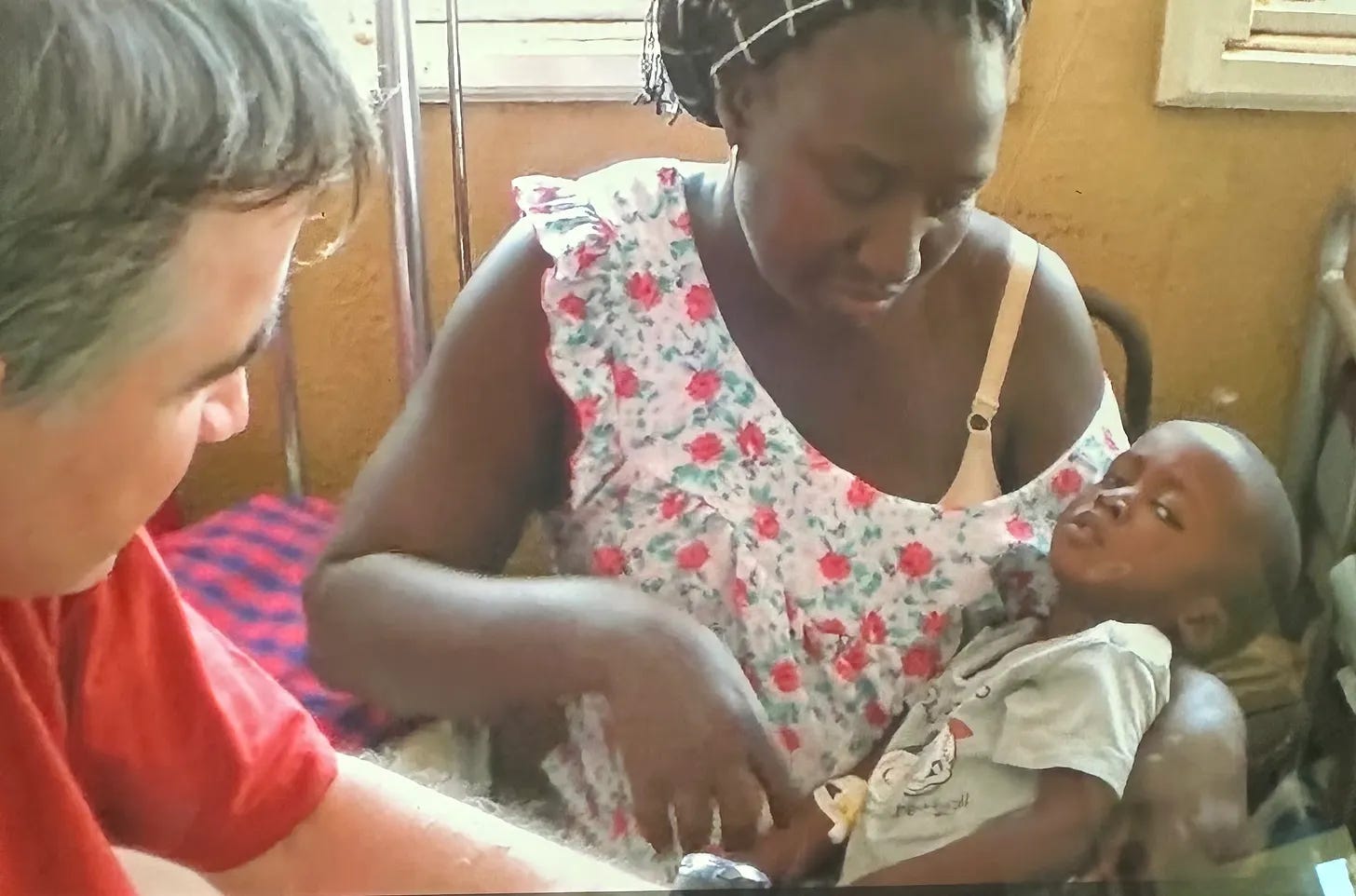
Without formal authorization but with learned clinical experience, he offered six to seven drops of chlorine dioxide in a cup of water to sick children at various malaria stages, some with bleeding lips. “You can tell just before they die,” he told me. “There’s a certain look. They can’t focus on you.”
Again and again, he saw delirious children quickly recover, “laughing and running around,” with parents “crying and hugging” their youngsters—and him.
“Just where there’s no hope, you go in and you give them something that cost me a penny per application, and you just save, save the kids,” he said. “There’s no better feeling.”
In his first ten years of treatment, Healy said he used just forty pounds of the dry material called sodium chlorite that when activated by citric or hydrochloric acid makes chlorine dioxide. That was enough to treat perhaps 80,000 to 100,000 people, he said, which may be why CD is not on any list of recommended pharmaceuticals.
It’s cheap. It’s widely available, including online. It can’t be patented. NASA’s 1988 article foresaw “broad potential” for chlorine dioxide in lung cancer, skin diseases, and herpes. That did not come to pass.
Scott and Karen Hodges, missionaries from Bakersfield, accompanied Healy on his rounds in the infant malaria ward in 2011. Although they had made other trips as missionaries, they were unfamiliar with, and leery of, chlorine dioxide.
“Some (children) wouldn’t drink it,” Scott Hodges said of the hospital visit. “Their mothers were skeptical of foreigners.” Some did take it and in a short amount of time—“a heartbeat” he said at first, but then reconsidered—the treatment kicked in.
“If I hadn’t seen it with my own eyes, I wouldn’t have believed it. How quick—it was like immediate—like a day. My wife and I were amazed.”
Karen Hodges texted me on her post-treatment observation: “Hours later or the next day, not exactly sure, but seeing that child after treatment . . . there was a tremendous difference,” she wrote. “The child was probably healed, the mother of the child was so appreciative, very heartwarming to see.”
Scott Hodges was impressed enough of chlorine dioxide’s benefits that he successfully used it, along with other natural remedies, when his late-stage cancer relapsed in 2015. He had been told to call hospice.
“Eleven years later, I’m still here,” he said.
Medicine and Jesus
Curious Outlier, as he is known, is a critical care nurse who produced what is perhaps the seminal documentary on chlorine dioxide in 2021 that included Healy’s story. He was compelled by it. I was too.
“If it wasn’t legit, Muslims would not be inviting a Christian into their communities and allowing the gospel to be brought in with it,” he said. “They told him that he could share Jesus as long as he brought his medicine. Seeing is believing.”
Zito Da Silva, Healy’s assistant at his clinic in Guinea-Bissau from 2009 to 2015, recalled a woman in her mid-twenties who had recently developed a full-body skin condition that was oozing a watery substance. She was very sick, he said. “She thought she was going to die.”
Da Silva, who was in charge while Healy was away, had treated serious illnesses before, including malaria and typhoid fever, mainly using chlorine dioxide and other natural remedies like neem leaves and moringa.
But he was scared by the enormity of the woman’s condition, for which he had no name. Two other clinic workers were similarly horrified.
The first thing the staff did was say a prayer.
Then Da Silva mixed a chlorine dioxide solution that he applied to her skin. That night, he had awful dreams. Within perhaps a week, during which she returned for topical and oral treatments, the woman’s skin cleared.
“She got healed,” said Da Silva, thirty-seven years old and living in Sao Paulo, Brazil, where I reached him by phone. “God did a miracle,” he said. “That medicine is very effective,” a word he used repeatedly in our conversation.
In a similar but not identical case—documented in photographs—another African woman’s disfiguring rash was also reportedly resolved with topical CD application.
Healy and the people who work for him are part medic, part missionary. “It’s hard to say what I love more,” he said. “I love them both.”
“They are interested in your medicine,” said Da Silva, who is now earning a computer science degree. “Therefore, they listen to you about Jesus.”
Of note, the clinic’s patients included many government officials, among them the national Assembly president and the former prime minister, both Muslim.
CD denied before
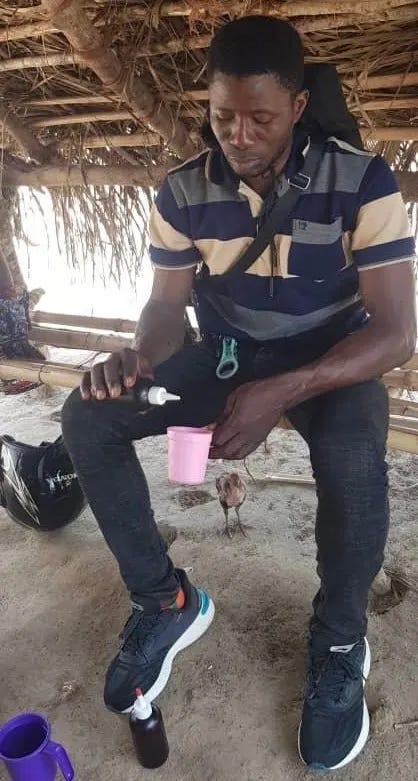
Five years and a pandemic later, Healy, now sixty-eight years old, is still saving bodies, souls, and, yes, teeth, in Africa. A five-minute chlorine dioxide rinse—four drops in an ounce of water—routinely resolves teeth abscesses and infections. He uses it on his own teeth to keep the dentist at bay.
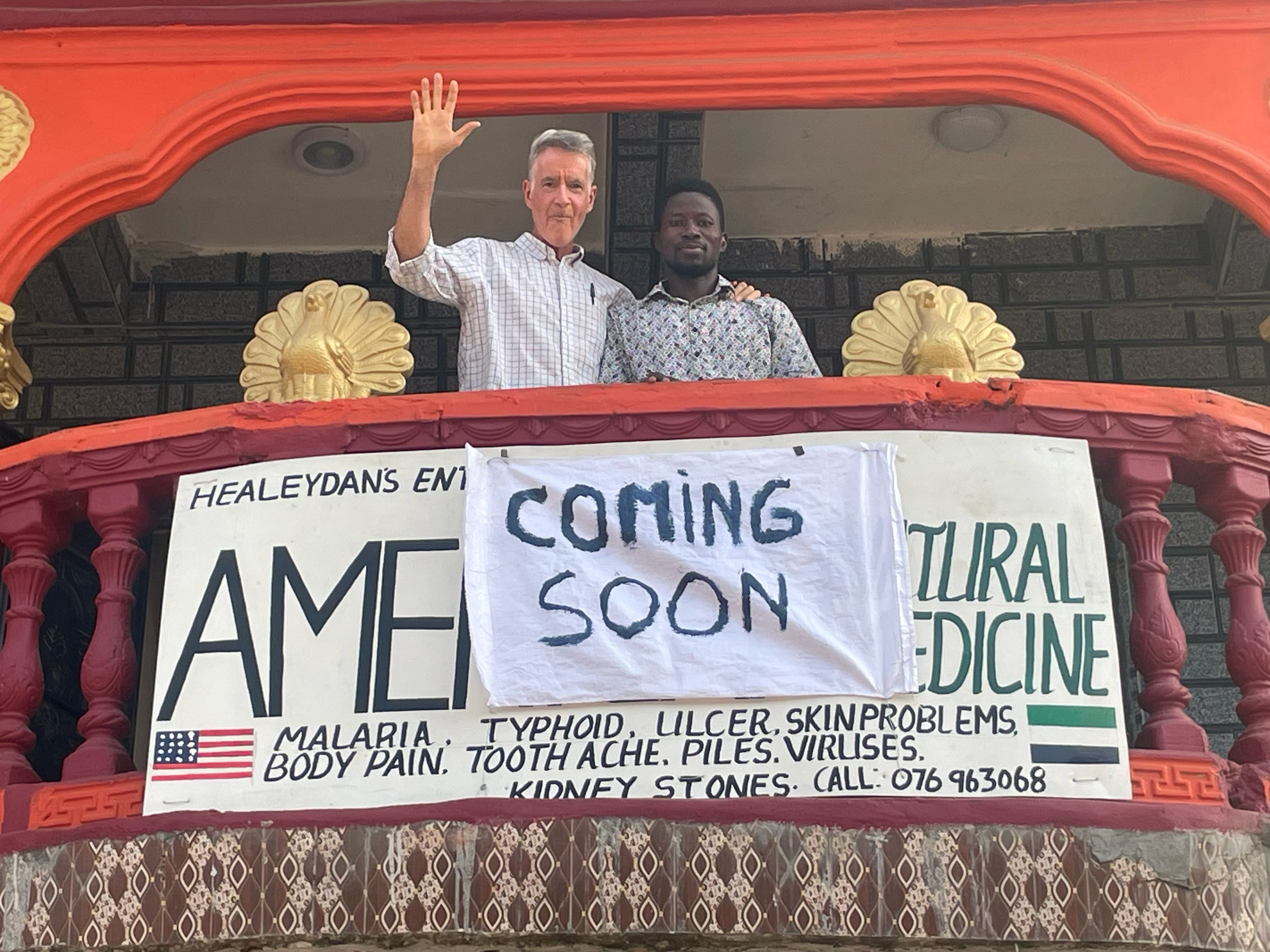
When Healy returns to Africa in July, he will likely move his clinic in Koidu, Sierra Leone, because of pressure from local doctors to pay unaffordable “oversight” fees. Similarly, he moved around after the assassination of the Guinea-Bissau president in 2009 and things changed. “They are on you. Paperwork became difficult,” he said.
The current plan is to open shop in the neighboring country of Guinea, with the help of a long-time Australian friend. There, Healy believes leaders of the large Fulani and Housa tribes may be open to his medicine—support he desperately needs.
Healy follows in the footsteps of others who have observed the power of chlorine dioxide.
In the 1980s, as reported in the book The War on Chlorine Dioxide, a U.S. engineer was tasked with building a water purification facility in remote Nigeria to contain a cholera outbreak. When he mistakenly used too much chlorine dioxide to clean the water, the engineer told the book’s author Dr. Pierre Kory, he received reports that not only was cholera under control, but malaria was being eradicated. He and his team thought the government would be ecstatic. They were instead drummed out of the country.
Decades later, a 2012 Ugandan Red Cross Society study documented the resolution of malaria parasites within a day in the blood of 154 people treated with chlorine dioxide. Although the project was sanctioned and videotaped, its findings were subsequently disavowed.
In both episodes, chlorine dioxide apparently risked upsetting the tenuous social order that is Africa. For Nigerian officials, the grim reality was that malaria was nature’s way of checking human population and if cured would lead to mass starvation.
“We didn’t have a solution to the big problem,” the engineer on the 1980s project told me for an article in March. “How are you going to feed the kids? I’ve agonized over this, lost sleep over this.”
How to help
Healy hopes that by revealing his name for this article, others might be encouraged to contact him (dhealy3@gmail.com) to learn what he knows and help spread and continue his work.
Healy doesn’t fear even Ebola, which is on the rise in Africa. “I wouldn’t even sweat it,” he said.
“God has protected me and he’s using this medicine to do crazy good stuff.”
 | A guest post by
|